Warm Homes Plan Explained: What the £15bn Government Scheme Means for Solar, Batteries and UK Homes

Last updated: January 2026
We’ll continue to update this guide as the government confirms how households can access funding.
The UK government has announced the Warm Homes Plan a landmark £15 billion programme designed to cut household energy bills, tackle fuel poverty and accelerate the rollout of low-carbon home technologies.
It’s being described as the largest home upgrade programme in British history, with a particular focus on solar panels, home batteries and low-carbon heating. But while the headline numbers are clear, many homeowners are still asking the same questions:
- What does this actually mean for my home?
- What support is available now and what’s still to come?
- Which upgrades genuinely reduce bills?
This guide explains what we know so far, what’s still being finalised, and how homeowners can prepare.
What Is the Warm Homes Plan?
The Warm Homes Plan is a five-year government programme running to 2030, backed by £15bn of public investment, with three core goals:
- Upgrade up to 5 million homes
- Cut household energy bills by hundreds of pounds per year
- Lift up to 1 million households out of fuel poverty
Rather than focusing on a single technology, the plan supports a whole-home approach, combining energy generation, storage and efficiency.
Which Home Upgrades Are Included?
The Warm Homes Plan prioritises technologies that reduce reliance on the grid and volatile gas prices.
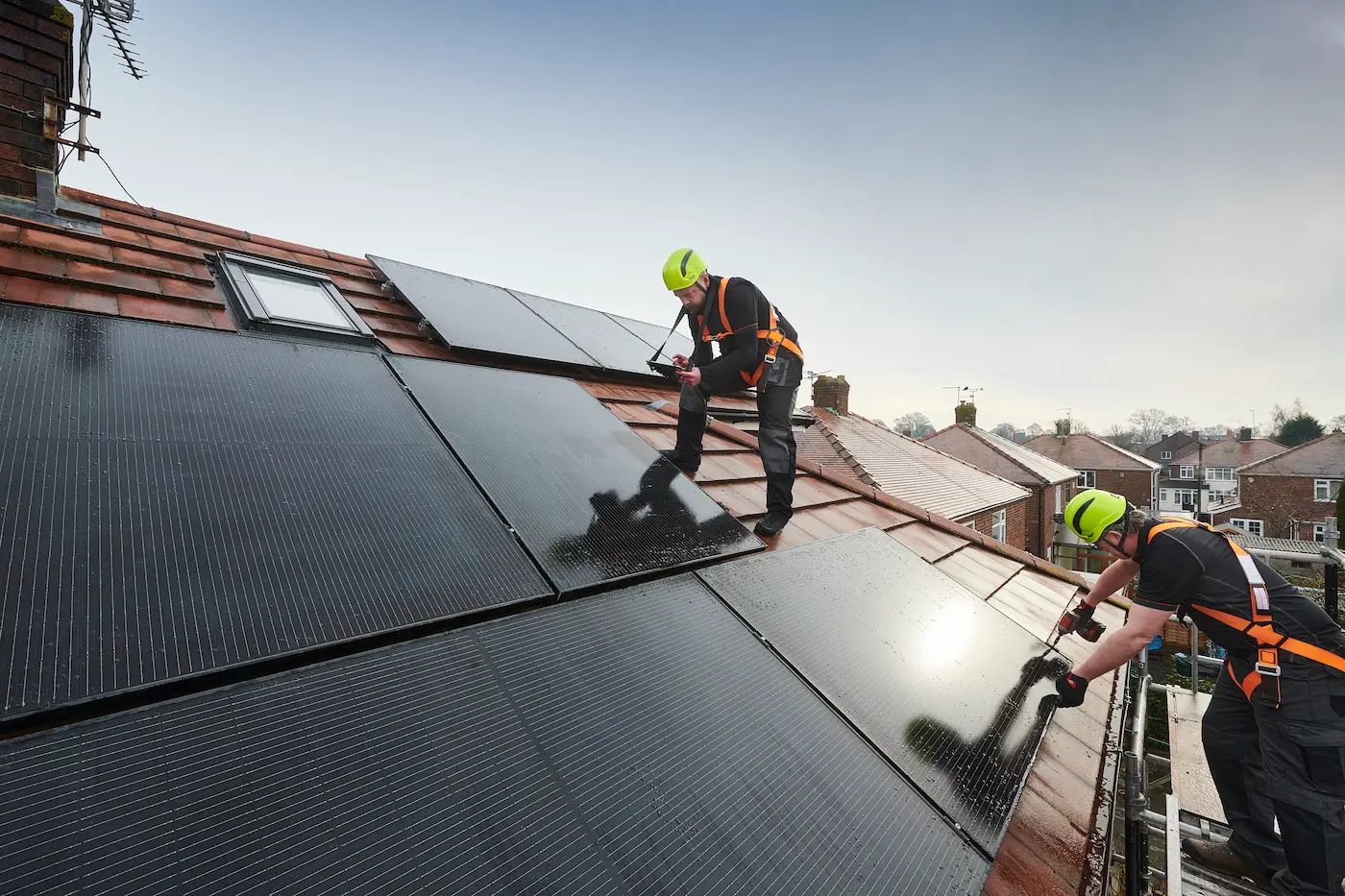
☀️ Solar Panels
- A central pillar of the plan
- Government-backed low and zero-interest loans available to homeowners
- Fully funded installations for some low-income households
- New homes to include solar panels as standard under upcoming building regulations
🔋 Home Battery Storage
- Explicitly supported for the first time at scale
- Enables households to store solar energy for evening and winter use
- Key to maximising savings and energy independence
🔥 Heat Pumps (Policy Direction)
- £7,500 grants extended to 2030
- Includes air-source and air-to-air systems
- Intended to replace gas and oil heating over time
- (See note below on current availability and suitability)
How Much Could Homes Save?
Government estimates suggest that a typical three-bedroom home installing solar panels, a battery and low-carbon heating could save around £500 per year on energy bills.
Independent estimates suggest savings could exceed £1,000 annually, particularly where:
- Solar generation is high
- Batteries are correctly sized
- Energy use is shifted away from peak grid times
The key point: systems work best when designed together, not installed piecemeal.
Heat Pumps: What the Plan Says (and What to Consider)
Heat pumps feature prominently in the Warm Homes Plan as part of the UK’s long-term move away from fossil fuel heating.
However, they are not a like-for-like replacement for a boiler in every home.
Important considerations:
- Electricity prices still matter
- Poor design or installation can lead to disappointing results
- Homes with solar and battery storage are far better placed to benefit
For many households, solar panels and batteries are the logical first step, reducing bills immediately and creating a strong foundation for future heating upgrades.
Who Is Eligible for Support?
The Warm Homes Plan is structured around three household groups:
Low-income households
- Fully funded upgrades (solar, batteries, insulation where appropriate)
- No upfront cost
Homeowners
- Access to low and zero-interest loans
- Universal grants for qualifying technologies
- Freedom to upgrade when it suits them
Renters and landlords
- New energy efficiency standards by 2030
- Landlords required to improve EPC ratings
- Support mechanisms expected to be phased in
What We’re Still Waiting to Hear
While the direction is clear, the government has confirmed that detailed delivery mechanics are still being finalised.
We are awaiting confirmation on:
- When applications for loans and grants will open
- Exact eligibility criteria
- How funding will be administered and by whom
- Installer accreditation requirements
- Whether combined systems (solar + battery) will be prioritised
- Regional variations across devolved administrations
👉 We’ll update this article as soon as these details are published.
What Homeowners Can Do Now
You don’t need to wait for every detail to be finalised to take sensible action.
Smart next steps:
- Assess your roof suitability for solar
- Understand your current energy use and costs
- Avoid rushed, low-quality installations driven by headlines
- Design systems that are future-proofed for upcoming grants and loans
At The Little Green Energy Company, we focus on premium solar and home battery systems designed to cut bills today and remain compatible with evolving government support.
The Bottom Line
The Warm Homes Plan marks a decisive shift in UK home energy policy.
For homeowners, it creates:
- Lower upfront barriers
- More choice
- A clearer long-term direction
For those who act early and invest in quality design and installation it’s an opportunity to reduce bills, increase resilience, and future-proof their homes.
This guide will be kept up to date as the Warm Homes Plan evolves.