Do solar panels add value to your home?
Answer the questions below to start your quote
More and more people across the UK’s South East are getting solar panels installed.
However, one of the most common questions our team at The Little Green Energy Company receives is: Do residential solar panels actually add value to your home?
The short answer is: Yes.
But the modern housing market is sophisticated, and the exact impact on your resale value depends on several critical factors.
In this guide, we break down how solar panels affect your property value and how to ensure your green investment delivers maximum returns.
1. The financial premium: The data behind solar home values
The most direct way solar panels enhance your home’s value is through tangible, year-round cost savings.
By generating your own clean electricity on-site, you reduce or even eliminate your reliance on the traditional power grid, translating into significantly lower monthly utility bills.
Because solar panels protect you against rising electricity costs, a pre-equipped solar home becomes an increasingly appealing prospect for buyers facing volatile market rates.
But what does this mean for your property’s asking price?
The 6% property premium
While individual valuations vary depending on size and location, academic and market research consistently shows a strong positive correlation.
A landmark study by Swansea University suggested that installing solar panels could add over 6% to your property’s value. On a typical £400,000 South East home, that equates to a potential value boost of £24,000.
Recouping the cost
Unlike temporary home improvements, investing in residential solar is a strategic move. Even after years of lower bills, the resale premium alone is often enough to cover your entire installation cost.
2. The “owned vs. leased” deciding factor: A crucial distinction
When buyers and surveyors evaluate a home with solar PV, they look closely at how the system was funded.
How your solar agreement is structured is a factor surveyors flag.
Owned systems: The ultimate selling point
If you own your solar panels outright, they are considered a fixture of the property.
The system increases your home’s overall value. This is because the new buyer inherits all of the bill savings and grid-export benefits with no ongoing lease payments or third-party contracts to take over.
The pitfall of traditional leased systems
Conversely, traditional leased or third-party-owned solar contracts can complicate the selling process.
If a buyer is forced to take over an outdated, long-term lease with rising monthly fees, it can quickly become a deal-breaker.
Some leased agreements even scare off potential buyers completely due to legal complexities during the conveyancing phase.
A modern alternative: The solar plan
To avoid these resale hurdles while keeping installation affordable, modern financing models have evolved.
For example, our partners at Hometree offer The Solar Plan. Under this arrangement, you pay a manageable monthly fee once the system is live.
Crucially for your home’s value, the Solar Plan covers lifetime monitoring, inspections, repairs, and parts replacement.
If you ever decide to sell your home and want to end the plan, you can easily do so by paying off the remaining balance, leaving the system fully clear for the new buyer.
3. Curb appeal and strategic roof placement
A common hesitation among homeowners is whether solar panels will impact their home’s appearance and “curb appeal”.
A solar installation done by the right professionals will not damage a property’s appearance.
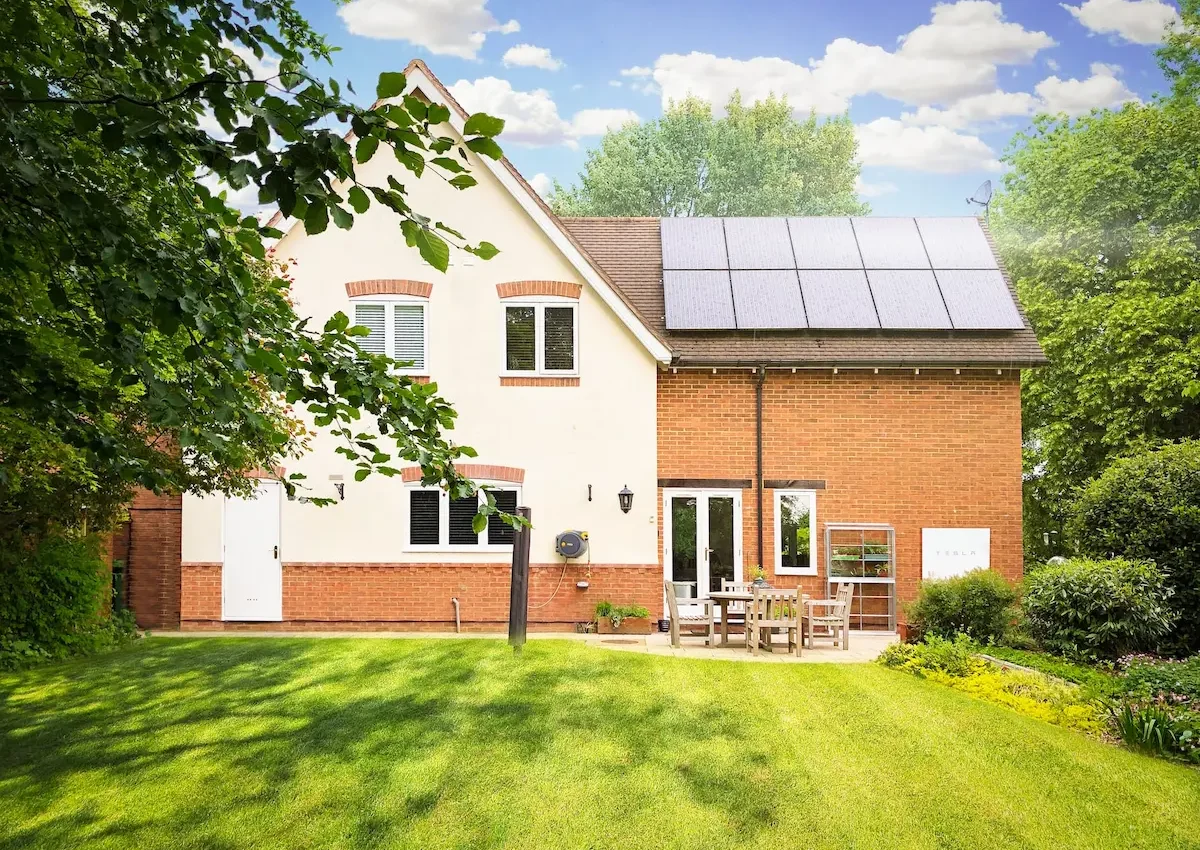
Modern systems can actually enhance a home’s aesthetic as a visible symbol of forward-thinking, energy-efficient living.
Maintaining curb appeal comes down to smart design:
- Placement and layout: During the survey phase, professional installers evaluate roof angles and orientation to optimize generation while respecting the building’s architectural lines.
- In-roof (integrated) solar: For homeowners concerned about the profile of on-roof brackets, in-roof integrated solar panels are an excellent alternative. These panels sit flush within the roof tiles, replacing a section of the tiles entirely. This is particularly popular for new builds, re-roofing projects, or properties where sleek, minimalist aesthetics are paramount.
- Kent’s Historic Character: In Kent and the surrounding South East, homes range from modern developments to historic, timber-framed cottages. For historic homes or those located in National Landscapes (the rebranded AONBs [Areas of Outstanding National Beauty]) or conservation zones, custom design adjustments—such as all-black panels, low-profile mountings, or ground-mount systems—are essential for preserving heritage charm while meeting planning guidelines.
4. Government incentives and future-proofing
Government policies are steadily moving towards energy-efficient homes as the standard, meaning that properties with existing eco-upgrades will have a distinct competitive advantage in future markets.
Tax benefits and grants
Existing installations are highly attractive to buyers because they allow them to bypass the initial setup phase while reaping the rewards.
In the UK, clean energy installations benefit from 0% VAT, making the initial installation more affordable for you.
Export income
Modern buyers appreciate that solar systems reduce electricity bills and can also generate income.
Through the Smart Export Guarantee (SEG), homeowners can sell any excess, unused electricity back to the grid, turning the roof into an active income-generating asset for the next owner.
5. Home resilience: The role of batteries and smart integration
The definition of “home value” has expanded to include resilience.
In an era of climate change and extreme weather events, buyers place a premium on energy independence.
A home equipped with solar panels combined with a modern home battery storage system (such as the Tesla Powerwall 3, Fox ESS, or SigenStor) is a major differentiator in the property market.
- Backup power: Battery integration allows the property to maintain power and run essential appliances during grid outages, providing a level of security that standard homes simply cannot match.
- Smart tariffs: When solar is paired with a battery, it allows the household to store cheap off-peak energy from the grid and use it when rates are highest, further driving down running costs and maximizing the home’s EPC (Energy Performance Certificate) rating.
Make your home stand out in the property market
Investing in residential solar PV is a win-win for both you and your home’s future buyer.
Whilst you enjoy immediate relief from rising energy bills, you are simultaneously building equity and boosting the marketability of your most valuable asset.
To ensure your solar PV system maximizes your property’s value, it is essential to work with an experienced, highly rated installer who understands local structural demands, planning rules, and aesthetic standards.
At The Little Green Energy Company, we are Kent’s award-winning solar panel installer with hundreds of 5-star reviews.
Whether you live in a modern home in Maidstone or a historic cottage in Goudhurst, our expert team can design a bespoke system tailored to your property.